Fire Officer Leadership Academy Blog
The Fire Officer Leadership Academy blog is a resource for fire officers committed to continuous growth. Here you’ll find practical insights on leadership, communication, career development, and character-based decision-making—drawn from real-world fire service experience and written to support officers at every stage of their leadership journey.
-
Part 2 — How Leaders Imprint Us
Imprinting is not just about receiving affection from our pets; it is about modeling. On a visit to a rural Colorado event center, we found not only dogs greeting us but a goat who ran with them — convinced he was a dog. That goat’s behavior revealed a basic principle: consistent exposure produces consistent behavior.…
-
Who Are You Imprinting, Following, and Impacting? — Part 1
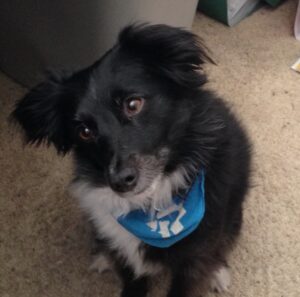
When Java first came into our family she kept her distance. Sixteen pounds of Toy Australian Shepherd / Rat Terrier intelligence wrapped in a tiny black and white body. She was cautious at first, then became my shadow. After retiring from the fire department and working my business full time from home, Java followed me…
-
I’m Watching You!
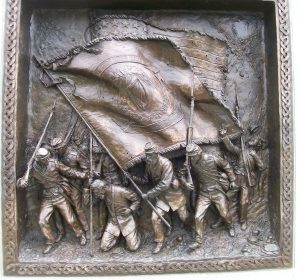
The photo above is the monument to the 96th Pennsylvania Infantry Regiment located along the Wheatfield Road in the Gettysburg National Military Park, Pennsylvania. This soldier is keenly peering into the distance watching the approaching Confederate army and the threat they pose to his position. This week’s post is not addressing physical, health, or economic…
-
Is Your Anchor a Good One or a Bad One?
The photo shows one of the anchors for the battleship U.S.S. North Carolina (BB-55) now on display in Wilmington, North Carolina. The length of the ship is 728’, she has a 103’3” beam, and a draft of 35’. Standard displacement for the vessel is 36,000 tons and 44,800 tons fully loaded.1 That is a tremendous…
-
Serving Our Nation
November 10th and November 11th. What is their significance to the United States? November 10th, 1775 The United States Marine Corps was formed 250 years ago on November 10, 1775, at Tun Tavern in Philadelphia, Pennsylvania. The original building no longer exists but a plaque marks the location where Tun Tavern once stood. Much has…
-
Why Won’t You Listen To Us?
Every year, organizations invest millions of dollars purchasing equipment, vehicles, software, etc. in a bid to be more efficient and effective. Additionally, thousands of dollars are spent to train personnel on how to operate the aforementioned items. Consequently, the people involved have an expectation that these items will properly work. However, that is not always…
-
Be the One That Engages
This post continues the series based on comments made by Mark Cole, the CEO of the Maxwell Certified Leadership Team. Speaking at the International Maxwell Certification event held in Orlando, Florida, he said, “Be the one” and then he touched on eight topics, including, “Be the one that engages.” What does that mean to me?…
-
Be the One That Counts
This post continues the series based on comments made by Mark Cole, the CEO of the Maxwell Certified Leadership Team. Speaking at the International Maxwell Certification event held in Orlando, Florida, he said, “Be the one” and then he touched on eight topics, one of which was “Be the one that counts.” What does that…
-
Be the One That Takes the Journey
This blog post, “Be the One That Takes the Journey,” is a continuation of a series I began in September based on comments made by Mark Cole, the CEO of the Maxwell Certified Leadership Team. Speaking at the International Maxwell Certification event held in Orlando, Florida, he said “Be the One.” What does “be the…
-
Be the One that Develops the Leader Within
Last month I started a series based on comments made by Mark Cole, the CEO of the Maxwell Certified Leadership Team. Speaking at the International Maxwell Certification event held in Orlando, Florida, he said “Be the One.” His first point was, “Be the one that develops the leader within” and for me that means: Developing…